A trip to the West Side Market usually starts with the food, and the building is easy to take for granted once you are standing at a stall. A little West Side Market history changes that, because the hall itself is a defining part of the experience and a good starting point for getting to know Ohio City.
Ohio City is on the near west side, just across the Cuyahoga River from downtown, and the market sits on West 25th Street. The West Side Market guide describes it as a neighborhood anchor with a remarkable ceiling. This story is a short plan for seeing the building properly: what to look at inside, what to notice from the street, and how to fold the architecture into an ordinary shopping trip.
None of this takes long. It asks for a few minutes of looking up before you start looking at the stalls, and a few more on the sidewalk outside. For Clevelanders who shop here often, it is also a reason to see a familiar place with fresh eyes.
Inside the hall
Look up at the Guastavino tile ceiling
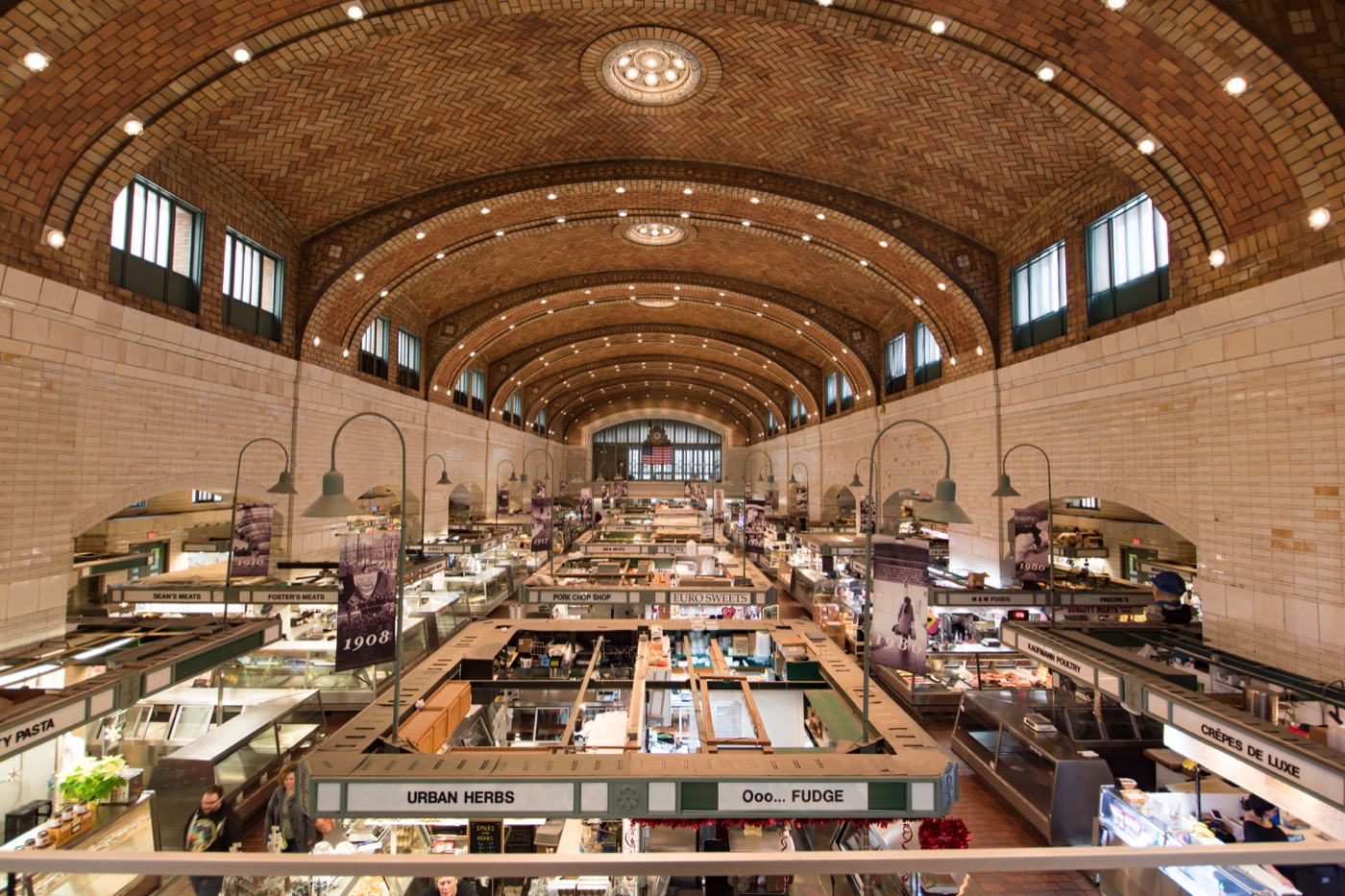
West Side Market opened to shoppers in November 1912. The hall was designed by local architects W. Dominick Benes and Benjamin Hubbell, and its defining feature is overhead: a vaulted Guastavino tile ceiling that rises 44 feet above the floor.
At street level, the stalls draw your eye first. Then you look up, and the scale of the room changes what kind of place you are in. A ceiling that high gives an everyday market the feel of a civic room, the kind of space a city builds for the public. It is worth standing still for a moment near the middle of the hall to take in the full span of the vault before you turn back to the counters. If the aisles are crowded, step toward an end of the hall where you can see more of the vault at once.
Pay attention to how the tile vaulting carries across the whole room from one side to the other. A photo from the floor looking straight up is the easiest way to capture it, and it makes a useful reference if you want to read more about Guastavino tile work later.
The date is worth keeping in mind as you look. The hall has been open to shoppers since 1912, which means the ceiling you are standing under has been over the heads of Cleveland shoppers for generations. The stalls below have changed with time, and the room above them is the part that connects today’s visit to the first one.
On the corner
See the clock tower from West 25th and Lorain
The market stands at West 25th Street and Lorain Avenue, and its clock tower rises 137 feet. The tower makes the building easy to recognize from a distance, and it is the first thing to look for if you are arriving on foot. Once you know its height, the tower reads differently from across the street, and it is a good place to begin a photo of the whole building.
Before or after you shop, cross the street and look at the building from outside. The tower, the hall and the corner they sit on work together, and seeing them from a little distance explains why the market is such a useful introduction to the neighborhood. Its presence on the corner is part of what the building offers, along with the room inside.
From the corner you can also get your bearings for the rest of Ohio City. West 25th Street and Lorain Avenue meet at the market, so the building works as a fixed point for any walk you add on, and the clock tower is easy to find again when you want to head back.
Planning
Fold the building into a browsing visit
Build the visit around curiosity rather than a strict shopping list. Browse what is available, ask vendors about what they sell and give yourself time to double back to a stall you passed. Looking at the building fits naturally into that kind of slow loop, since the ceiling stays in view as you move through the aisles.
If you are bringing someone who has never been, start them outside at the corner, walk them in and let them find the ceiling on their own. It is a simple way to show off the building without turning the trip into a tour, and the shopping can follow at whatever pace suits the group.
Vendors, hours and visit details change, so check the official West Side Market website for the current vendor directory, opening hours and visitor information before you head over. The market’s own history section is the best place to read further about the building, and the West Side Market guide has the official sources in one place.
If you like markets, the guide to farmers markets in Cleveland covers other places to shop for food around the region. For a first day in the city that crosses the river into downtown, see the first Cleveland day guide.
Good to know
Questions before you go.
Can I visit West Side Market just to see the building?
Yes. The hall is open to the public during market hours, so you can walk through without buying anything. Check the official site for current hours.
How close is West Side Market to downtown Cleveland?
It is just across the Cuyahoga River from downtown, close enough to pair with a downtown day.
The full guide
Read the West Side Market guide
The West Side Market guide covers the hall, the clock tower and the official sources for vendors, hours and market history.